Executive Summary
End-tidal CO₂ (EtCO₂) is an essential yet often underutilised parameter in respiratory diagnostics. It provides real-time, non-invasive insights into pulmonary ventilation, perfusion, and metabolic function, making it a powerful tool for the early detection of respiratory diseases. Unlike traditional diagnostic methods such as arterial blood gas (ABG) tests, pulmonary function tests (PFTs), and pulse oximetry, EtCO₂ allows continuous monitoring of respiratory function, helping clinicians detect abnormalities before symptoms become severe.
This blog explores the significance of EtCO₂, its role in identifying various respiratory diseases, and how the MediPines AGM100 leverages EtCO₂ measurement to enhance early detection and treatment decisions. Key takeaways include:
-
EtCO₂ as an early indicator of respiratory dysfunction: It helps detect hypoventilation, hyperventilation, and ventilation-perfusion mismatches before oxygen saturation (SpO₂) drops.
-
EtCO₂ in diagnosing respiratory diseases: It plays a critical role in conditions such as COPD, asthma, pulmonary embolism, ARDS, COVID-19, and high-altitude sickness.
-
How AGM100 revolutionizes pulmonary diagnostics: By incorporating EtCO₂ measurement, the FDA-cleared MediPines AGM100 provides rapid, non-invasive, and highly accurate assessments of pulmonary function, aiding in early intervention and optimised treatment strategies.
EtCO₂ monitoring is a game-changer in respiratory medicine. By integrating it into routine clinical practice, healthcare providers can significantly improve early disease detection, enhance patient outcomes, and reduce healthcare costs associated with late-stage respiratory complications.
Introduction
In respiratory medicine, precise and early diagnosis is key to improving patient outcomes. While traditional parameters such as arterial blood gas (ABG) analysis, oxygen saturation (SpO₂), and pulmonary function tests (PFTs) provide valuable information, they often fail to offer real-time, continuous, and non-invasive insights into pulmonary function.
One of the most underutilised yet powerful parameters in respiratory diagnostics is end-tidal carbon dioxide (EtCO₂)—the concentration of CO₂ in exhaled air at the end of expiration. EtCO₂ serves as a real-time indicator of ventilation efficiency, perfusion status, and metabolic function, making it a highly valuable tool in diagnosing and managing various respiratory conditions.
The MediPines AGM100, an FDA-cleared, non-invasive pulmonary gas exchange analyser, integrates EtCO₂ measurement to help clinicians rapidly and accurately detect pulmonary dysfunction.
This article explores the significance of EtCO₂, how it helps in diagnosing a range of respiratory diseases, and how AGM100 leverages this parameter to enhance early detection and clinical decision-making.
What is End-Tidal CO₂ (EtCO₂) and Why Does It Matter?
EtCO₂ represents the partial pressure or concentration of carbon dioxide in the exhaled breath at the end of expiration. It is measured in millimetres of mercury (mmHg) or as a percentage and provides insight into three critical physiological processes:
-
Ventilation (Breathing Efficiency) – Determines how effectively CO₂ is eliminated from the body.
-
Perfusion (Pulmonary Blood Flow) – Reflects how well blood is circulating in the lungs to transport CO₂ for exhalation.
-
Metabolism (CO₂ Production at the Cellular Level) – Indicates how much CO₂ is generated from cellular respiration.
Normal vs. Abnormal EtCO₂ Levels
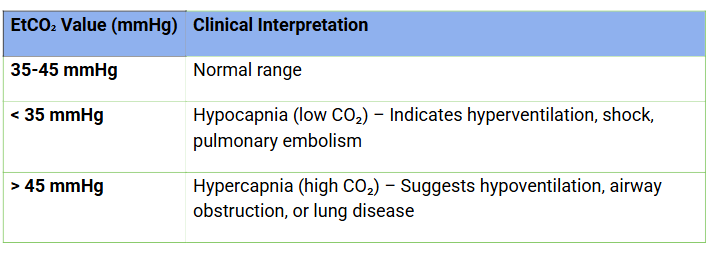
EtCO₂ levels fluctuate in response to respiratory pathology, making it a sensitive early indicator of pulmonary dysfunction, often before oxygen saturation (SpO₂) declines.
Why is EtCO₂ a Superior Parameter for Early Disease Detection?
Diagnostic tools like ABG tests and pulmonary function tests (PFTs) are valuable, but they have significant limitations:
-
ABG requires arterial blood sampling, which is invasive and provides only a single-point measurement rather than continuous monitoring.
-
Pulse oximetry (SpO₂) is affected by oxygen therapy and doesn’t directly measure CO₂ levels, potentially missing early signs of ventilation issues.
-
PFTs require patient effort and may not be feasible in critically ill individuals or those with neuromuscular diseases.
EtCO₂ overcomes these limitations by offering:
Continuous and Non-Invasive Monitoring – No need for blood draws, providing real-time respiratory assessment.
Early Identification of Respiratory Dysfunction – Detects abnormalities in gas exchange before oxygen levels drop.
Rapid Response to Treatment – Allows clinicians to adjust oxygen therapy, ventilation, or medications in real-time.
Respiratory Diseases That Can Be Identified Using EtCO₂
EtCO₂ plays a pivotal role in diagnosing and managing various pulmonary diseases. Below are some of the most common conditions where EtCO₂ proves invaluable.
1. Chronic Obstructive Pulmonary Disease (COPD)
COPD is a progressive lung disease characterized by airflow obstruction and CO₂ retention due to poor ventilation.
-
Increased EtCO₂ (>45 mmHg): Suggests CO₂ buildup due to hypoventilation or poor lung function.
-
Fluctuating EtCO₂: May indicate acute exacerbations, helping guide bronchodilator therapy.
-
EtCO₂ monitoring in COPD patients helps clinicians assess disease progression and response to oxygen therapy.
2. Asthma
Asthma is a chronic inflammatory condition leading to bronchoconstriction and airflow limitation.
-
Low EtCO₂ (<35 mmHg) during an asthma attack suggests hyperventilation due to difficulty exhaling CO₂.
-
A sudden increase in EtCO₂ may indicate respiratory fatigue and impending respiratory failure, requiring immediate intervention.
-
EtCO₂ tracking aids in early detection of exacerbations and monitoring of bronchodilator effectiveness.
3. Pulmonary Embolism (PE)
A pulmonary embolism (PE) occurs when a blood clot blocks pulmonary circulation, leading to impaired oxygenation.
-
Markedly decreased EtCO₂ (<30 mmHg) is a key warning sign due to reduced CO₂ delivery from the blood to the lungs.
-
In cases where SpO₂ is normal but EtCO₂ is low, clinicians can suspect a ventilation-perfusion (V/Q) mismatch, which is characteristic of PE.
-
EtCO₂ measurement allows rapid identification of PE in emergency settings, reducing the need for invasive imaging tests.
4. Acute Respiratory Distress Syndrome (ARDS)
ARDS is a severe lung condition caused by inflammation and fluid accumulation, leading to respiratory failure.
-
Decreased EtCO₂ suggests ventilation inefficiency and increased dead space in the lungs.
-
Monitoring EtCO₂ helps determine the severity of ARDS and optimize mechanical ventilation settings.
5. COVID-19 and Post-COVID Lung Dysfunction
COVID-19 primarily affects lung function and gas exchange, causing silent hypoxia and ventilation abnormalities.
-
Reduced EtCO₂ indicates impaired alveolar ventilation in COVID-19 pneumonia.
-
Post-COVID lung fibrosis may result in persistent low EtCO₂ levels, indicating chronic diffusion impairment.
-
EtCO₂ monitoring is crucial for long-term respiratory assessment in post-COVID recovery.
6. High-Altitude Sickness and Hypoxia
At high altitudes, the body compensates for lower oxygen levels by hyperventilating, which affects CO₂ elimination.
-
Low EtCO₂ (<30 mmHg) suggests hyperventilation due to altitude-induced hypoxia.
-
Tracking EtCO₂ trends can help prevent acute mountain sickness (AMS) and guide oxygen therapy.
How AGM100 Uses EtCO₂ for Early Detection and Monitoring of Respiratory Issues
The MediPines AGM100 is an FDA-cleared, non-invasive device that integrates EtCO₂ measurement to provide instant, real-time pulmonary assessments.
Key Benefits of AGM100 in Leveraging EtCO₂
Instant, Non-Invasive CO₂ Analysis
-
No need for arterial blood gas (ABG) tests.
-
Provides real-time insights into ventilation efficiency.
Early Detection of Respiratory Dysfunction
-
Identifies subtle CO₂ abnormalities before patients become symptomatic.
-
Helps clinicians detect COPD exacerbations, asthma attacks, and early hypoxia.
Optimised Treatment Monitoring
-
Tracks EtCO₂ changes over time to assess therapy effectiveness.
-
Guides oxygen therapy adjustments in critically ill patients.
Portable and Versatile
-
Suitable for hospitals, clinics, emergency departments, and even remote settings.
Conclusion: EtCO₂ as a Game-Changer in Respiratory Medicine
EtCO₂ is a powerful, underutilised parameter that provides early, accurate, and continuous monitoring of pulmonary function. By incorporating EtCO₂ measurement, clinicians can detect respiratory disease progression, guide oxygen therapy, and improve patient outcomes.
The MediPines AGM100 revolutionises pulmonary diagnostics by offering a non-invasive, rapid, and highly accurate method for monitoring EtCO₂, making it a vital tool in modern respiratory care. Integrating EtCO₂ assessments into routine practice will transform the early detection and management of respiratory diseases, ultimately leading to better healthcare outcomes and reduced hospitalisations.
Write to us at info@stage021.com or visit our website, www.stage021.com, to learn more.

 By
By